
 Safeguarding
 Find a church
 Find clergy
 Donate
Governing Body Meeting September 2026
The Governing Body met for its Ordinary Meeting on Wednesday, 9 and Thursday, 10 September 2026 in Newport. The meeting was live-streamed and you can read the summary and watch each session below.
Session 1
Session 1
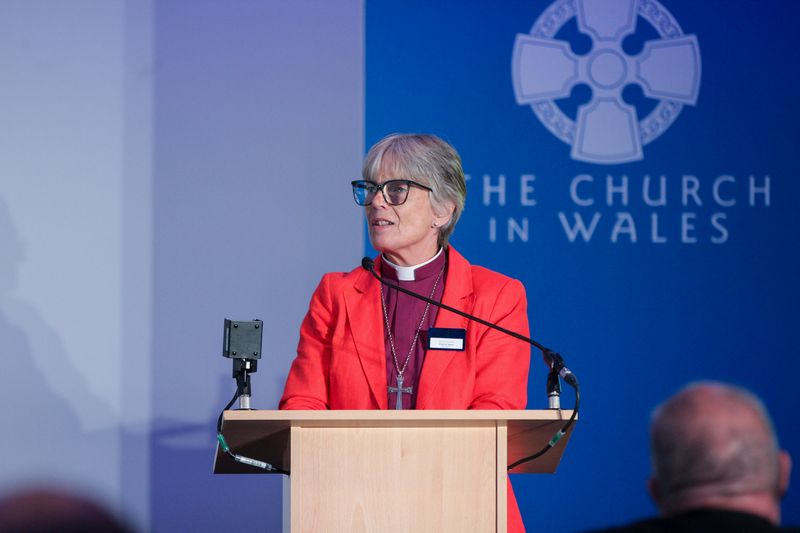
Presidential address
The Archbishop of Wales, the Most Revd Cherry Vann, opened this meeting of the Governing Body with a reflection about what the Church, in Wales and around the world, was called to be. She read a passage from Acts about the early Church which she found “immensely challenging”. It described a “vibrant and God-centred community” sharing all things together so that no-one remained in need. In the 2,000 years since as the Church had grown and spread around the world it has fractured and split many times, creating today’s approximately 45,000 different denominations worldwide. “We can’t go back to what seems a blissfully simple way of being Church”, Archbishop Vann lamented, but the modern Church must hold onto the principles of its first century forebears. Living so radically different to their societies that people couldn’t but notice. This was a challenge but when we manage it in glimpses “it is a gift not just to ourselves but to the world”, Archbishop Vann said.
Sharing must be a central part of this, sharing faith but also resources and money. This might trigger human instincts but Christian discipleship was about learning to be “open and generous” rather than “defensive” with our possessions. The Church in Wales was an institution, not a business, Archbishop Vann said. Nor should it become a “branch of social services”, despite the self-evident call to love and serve. But Jesus did not commission his disciples to solve the world’s problems but to share the Good News of him: “That is what transforms people’s lives. That is the treasure we have to offer the world.” This had to happen not just through words but in deeds as well. Archbishop Vann reflected on the metaphors of the Church as salt, light and leaven, rejecting imposing faith by force in favour of influence and invitation. She urged these passages from Acts to serve as a template and inspiration for the Church in all it does, including the coming days of this GB meeting.
After a period of reflection within small groups, some members shared feedback from Archbishop Vann’s speech. The Revd Andrew Lightbown (Monmouth) spoke about making prayer a priority, and building towards greater “fairness and equity”.
Richard Parry (Swansea and Brecon) contrasted the Church’s buildings inheritance and its true treasure, the gospel. How can the clergy be supported to move through this “cultural shift”?
The Archdeacon of Newport, the Ven James Henley (Monmouth), asked how the Church in Wales might create more “open and honest” spaces to enable greater consensus about the way forward.
In response, Archbishop Vann said the Church had to be honest with itself: “The work of being a Christian is hard work if we are going to take Jesus seriously.” Financial sacrifice was a particular challenge, especially for those of us in the comfortable, consumerist West. There was also a need to learn further about how to learn together and respect each other’s diversity of views, while remaining “of one mind”. Small group discussion and meals between different diocesan delegations at the GB itself was a good start, she suggested.
Session 2
Session 2
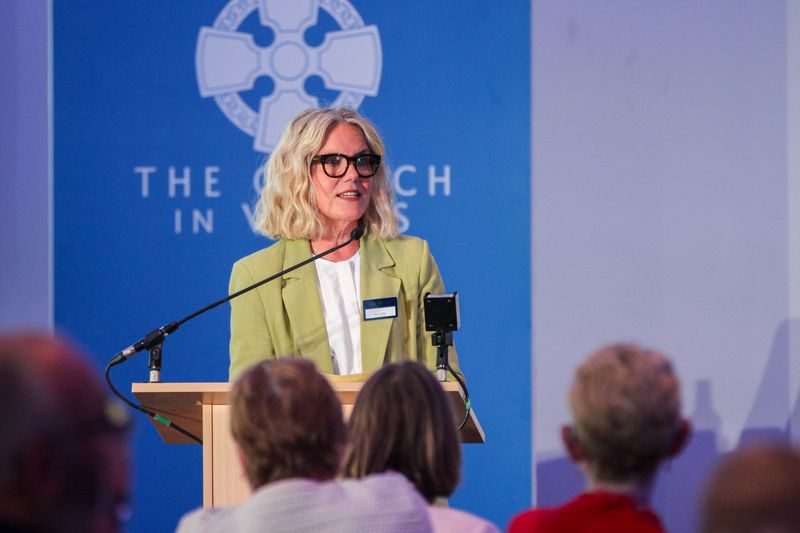
Education presentation
The Bishop of St Davids, the Rt Revd Dorrien Davies, introduced an update on the Church’s work in schools. He said every day across Wales the Church served 27,000 pupils in 141 schools with education, care and support. More than a fifth of these schools were Welsh-language institutions. Church schools sought not just academic excellence, but holistic human flourishing for children from “all backgrounds and faiths so every one can fulfil their God-given potential”.
Church schools were working to improve their governance and the Church in Wales was partnering with the Church of England to strengthen leadership training. Another highlight was the national conference at the Principality Stadium in Cardiff, Bishop Davies said, which was a tribute to the strong partnerships education teams had built across Wales.
But schools were facing strong financial pressures, especially smaller rural schools, he warned. There was also a challenge to protect Church school status which “cannot be taken for granted”. The Church must continue to be vigilant and to forcefully defend the value of Church education. Many local authorities were watching carefully how the Church could sustain its schools, Bishop Davies said. “If we lose our grasp on our Church schools we lose grasp on influence – it is important that the Christian faith burns within the schools of our care.”
Schools were also grappling with recruiting enough head teachers and the growing numbers of pupils with special needs. Local councils were withdrawing “vital financial support” for such children, he said, and at times the Church would have to step in instead.
The Church believed that education was more than attainment, but flourishing in hope, purpose and belonging – this was a gift the Church must continue to offer education in Wales and it was important to protect this into the future.
Lisa Taylor, provincial director of education, said each day Church schools aimed to ensure there were “no lost souls”. She then introduced a video made by some schools about what it was like to be inspected by the Church in Wales, which focused on collective worship, religious education and values. Thirty such inspections are due this year, Ms Taylor said.
She handed over to Emily Lloyd, the Representative Body’s advisor on religious education and Christian ethos, who said there was no “one-size-fits-all” approach to living out such an ethos. She framed it around four ‘W’ values: welcome, welfare, worship and wisdom. She helped schools to explore what Christian hospitality and inclusion meant in their context, how to embody love and forgiveness in their community, how to build connection with God and opportunities for spiritual growth, and how to include the Christian tradition in their curriculum and teaching.
Members then heard from a delegation from Llangattock Primary School in Powys. The headteacher Katherine Durbin said she felt profoundly supported and encouraged by being part of a Church in Wales school. She praised Ms Lloyd who had helped her school develop its Religion, Values and Ethics (RVE) curriculum and set up an ethics committee of pupils, some of whom shared with the GB different elements of their schools engagement with RVE.
Children from another Church school in Barry and the organisation iSingPOP – who work with schools to share God’s love through music – then performed songs they had learned through this project.

Session 3
Session 3
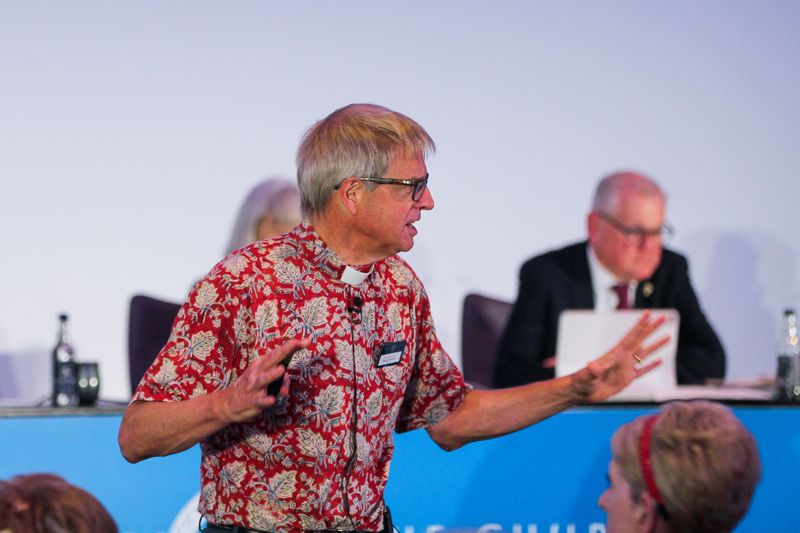
Duncan Dormor
The GB were then introduced to the work of the Anglican mission agency USPG, whose General Secretary, Canon Dr Duncan Dormor, explained that his organisation was deeply embedded across the Anglican Communion (indeed his predecessors had founded a large minority of Anglican Churches overseas) but was now engaged in partnership with local workers rather than sending Western missionaries around the world. USPG was also integrated into the Church in Wales, with each diocesan bishop one of the society’s vice-presidents.
Today, USPG was focused on developing indigenous Anglican theologies and liturgies and reframing mission around hospitality, solidarity, and reparatory justice. The imperial origins of the Anglican Communion were also an unavoidable part of USPG’s story too, Dr Dormor added, but today it sought to help Anglican provinces worldwide to “experience deeper solidarity in Christ and be sources of transformation” in their own communities. USPG were mentoring and supporting young theologians from beyond Europe, resourcing theological colleges and their leadership, and convening international conferences to address difficult topics including the history of the slave trade.
There was other work underway in supporting women bishops in Africa, helping provinces engage in climate justice projects, and tackling transmission of HIV from mother to child. USPG owned a slave plantation in Barbados for 120 years and was well into a £7m reparatory justice project to try and atone for this sordid history, Dr Dormor added. He invited any dioceses to approach him to see if there were “bespoke” mission projects USPG could set up with them.
Heather Payne (Llandaff) asked Dr Dormor what “unpacking unthinking Eurocentricity” looked like. He said this was a challenge, but involved making honest spaces where people from all over the world could voice their contexts. “It’s an extension of that pastoral business of really listening.” It also required adaptation to different ways of working, including things like how a meeting was organised.
The Revd Sarah Prosser (Monmouth) had been working with USPG and travelling overseas for some time and found it “stretching” and inspirational.
RB report
The future of funding in the Church was brought back to the GB by Professor Medwin Hughes, chair of the Representative Body, as he shared the RB’s annual report. Prof Hughes highlighted in particular the “unqualified” audit report the institution received earlier this summer. The RB reported a small surplus of £900,000, having turned around a larger £2.9m in 2024, Prof Hughes said. Spending had been cut significantly by £4m, bringing income and expenditure back into balance. But the RB’s financial position was largely based on its assets and investments, and while investment gains were lower than in 2024 they remained the main driver of financial growth for the Church (covering 94% of the RB’s income). The staff pension scheme had also improved over time. Prof Hughes also reminded members that the clergy pension scheme formed part of the RB’s investments and that whatever decisions they made on reforming funding in the Church they must do right by clergy in retirement.
The RB had been informed by its external financial advisers that a 4% withdrawal rate from its investments is the maximum sustainable level, Prof Hughes said. The principle of living only off the investment’s profits without dipping into the underlying assets was crucial, he told the GB. “Exceeding sustainable withdrawal levels could weaken the Church’s long-term financial position.” After including pension liabilities and contingency funding, the RB was aiming for its investments to total around £800-900m, so that the Church could continue throughout challenging economic conditions into the future. But he acknowledged it was vital to educate ministry areas struggling financially with why the RB needed to hold onto to “hundreds of millions in the coffers”, as it could be hard to hear.
The current position of the RB met the minimum required level, but planned withdrawals of capital would reduce the investment portfolio’s value in the coming years, Prof Hughes warned. He has asked RB staff to find £5m in cuts to spending, with a further £1m cut from the St Padarn’s budget specifically.
Independent scrutiny of the RB had been ramped up, reviewing at its risk management in particular. Future reviews would explore financial controls, safeguarding and more. The Church Growth Fund remained paused since the last GB in April, as wider conversations about the Church’s funding were had.
There was no debate, and the report of the RB was voted to be received.
Prof Hughes then presented a document called the Future Funding paper, which explored reforms to the Church’s finances initially called for by a motion at a previous GB meeting. An informal consultation had been underway, including the Bench of Bishops, for some time now but formal proposals had not yet coalesced. Instead, Prof Hughes said he wanted to share more of the RB’s current thinking and options with members.
The RB had heard a call for more financial support direct to dioceses and ministry areas, on top of the Church Growth Fund, he said. Every bishop had told him that there was a genuine risk of their diocese becoming non-viable in the not too distant future, but that even as churchgoing declined they wanted to preserve existing structures. “I respect that, and so our work has been within the parameters of that,” he said. Any additional funding to ministry areas must come through the dioceses: “Without resilient dioceses, ministry areas will struggle.”
The question was how: should the current situation continue, where dioceses bid against each other for one-off funding for projects, or should the Church give clear, consistent funding to all dioceses. “Universality, or targeted distribution?”
The RB was already spending beyond its means, and to increase distribution beyond what was already committed to under the Church Growth Fund would eat into its reserves (and therefore reduce money available to future generations).
Intergenerational equity was vital and a question of stewardship. The money available today was not generated by this generation alone and therefore is not for us to spend alone, Prof Hughes argued. Nobody wants to become the “wealthiest Church in the graveyard”, he admitted, but this missed the point.
In the rush to squeeze more cash out of the RB now to fund ministry today, there had not been sufficient preparatory theological reflection about what kind of Church the GB thought it should be into the future. The question was not about spending versus saving, but on what to spend resources.
The RB had chosen to take on the cost of buildings insurance for all ministry areas, forever, saving an average of £17,000 a year. But to avoid the province facing greater financial risks, closing the Church Growth Fund early must be considered, he warned. This would be unpopular, no doubt, with those dioceses yet to benefit from it, Prof Hughes admitted. But if the remaining £70m from the Fund was repurposed to be given directly to dioceses over the next 5 years, each would receive between three and six million pounds extra compared to their existing support from the RB.
There should also be additional funds to each diocese running from 2033-40, to cover the rest of a “transition period” in which each diocese has stability to make longer-term plans, and if necessary “prune to grow”, Prof Hughes said. In total, each diocese would receive from the RB between £8m and £13m over the course of 2027-40, a total investment of £129m. This proposal would see each diocese’s direct funding more than double from what they were currently expecting. These were only working figures, but showed how the RB was trying to respond to calls for more money from the GB.
“Yes, it would be a difficult decision to bring the Growth Fund to an end, but at this point in our life what has the most impact?” This would create time for dioceses to strengthen, agree local priorities, develop partnerships for a future longer-term plan. And if things needed to change in the future, this would allow future generations to choose new strategies as it maintained “intergenerational equity”. But there still needed more debate about “shaping the Church of the future”, Prof Hughes argued, beyond simple how to pay for things. Perhaps a special one-off GB session could be called next year for this purpose.
The Archdeacon of Carmathen, the Ven Dr Matthew Hill (St Davids), noted three dioceses had not yet benefitted from the Church Growth Fund, including his own, and if the Fund was to be wound down why couldn’t existing approved projects elsewhere also be cut off from already approved fuinding.
The Revd Dr Sue Hurrell (Llandaff) said competitive processes had some waste baked in as only one project of many could win, but said a diocesan model as sketched out by Prof Hughes would lead to better lines of accountability.
The Archdeacon of St Asaph, the Ven Andy Grimwood, asked where he could find the priorities of the Church in Wales spelled out. And until those were sorted out, the conversation about how to spend money was “putting the cart before the horse”.
The Revd Andrew Lightbown (Monmouth) worried the politics and mission of the Church were getting confused. It did not make sense to evenly distribute funds across the entirety of Wales, he suggested. “We need to be fair to people, not dioceses – we serve a kingdom not an institutional structure.” There was a danger of a “false binary”, money could be distributed both through the dioceses and in direct grants.
The Bishop of St Asaph, the Rt Revd Gregory Cameron, said his concerns had been assuaged by Prof Hughes, and welcomed the call to do some more theological work to decide why the Church existed and what it was called to be. The diocese was the best place for spending to be controlled and directed, he argued.
The Archdeacon Missioner in St Davids diocese, the Ven Mones Farah, said ministry areas must feel the benefit of this extra money even if it was distributed originally to the diocese. He urged the consultation to reach beyond the usual holders of power in the Church.
The Revd Richard Wood (Bangor) lamented how the Church had no idea how it was doing in terms of making disciples having no bothered to examine the question for years. It was fundamental for the GB to consider what kind of church it was and wanted to be, before it chose a particular funding model.
The Revd Canon Stuart Elliott (Bangor) asked what type of investment would give the best impact in making disciples. Only when that had been established should the question of what the Church could afford be tackled.
Bishop Davies said his diocese’s bid for the Church Growth Fund should still receive a fair hearing in time, even if the fund was frozen currently. Nevertheless, he welcomed the proposals offered by Prof Hughes, which aligned with St Davids’ “pruning for growth” plan (which had identified 30 churches which could be closed, and 53 others selected for growth). His diocese’s own internal census showed church attendance had now surpassed the figures it hit pre-Covid: “God is at work!”
The Revd Geraint John (Llandaff) said an equal split between the six dioceses would not be fair, especially as some had yet to receive money from the Church Growth Fund. Equity should be sought, rather than strict equality.
Ian Loynd (Monmouth) argued that funding the diocese was to fund the ministry areas, the two should not be seen as in conflict.
The Revd Steven Brett (St Davids) asked why reducing the number of dioceses was off the table, given ministry areas were already tasked with pooling resources and closing churches which were not fruitful.
The Archdeacon of the Gwent Valleys, the Ven Stella Bailey (Monmouth) asked if the current trajectory of the Church’s membership and giving could be projected into 2040, rather than simply assuming if more money was thrown at the problem things would work out. “Let’s be realistic and honest with ourselves,” she argued, including asking reaching questions about what clergy numbers were needed.
The Revd Emma Dale (St Asaph) noted abandoning the Church Growth Fund did not mean dioceses had to stop spending their money on pioneering projects.
The Revd Ruth Rowan (Llandaff) urged the GB to adopt some “way markers” so that it could be assessed in five or ten years’ time if this new transition funding was working as hoped.
Canon Dr Mark Clavier (Swansea and Brecon) said local churches were far too dependent on others coming to solve their problems. If funds were lacking, the best place to raise them were by growing the congregation and boosting giving. “The issue comes down ultimately to faith.”
The Archdeacon of Meirionnydd, the Ven Robert Townsend (Bangor), said many of his ministry areas were “approaching a cliff edge”, and most of his diocese’s clergy will have had to retire by the time this 2040 transition period came to an end. The Church had to divert some of its future funding to boost vocations, both lay and ordained.
Julia Schultz (Bangor) was surprised how much the Church relied on its investments, rather than prayer and people.
Responding to the debate, Prof Hughes said he had heard the “urgency” from the dioceses and praised the “honesty of the debate”.
Session 4
Session 4
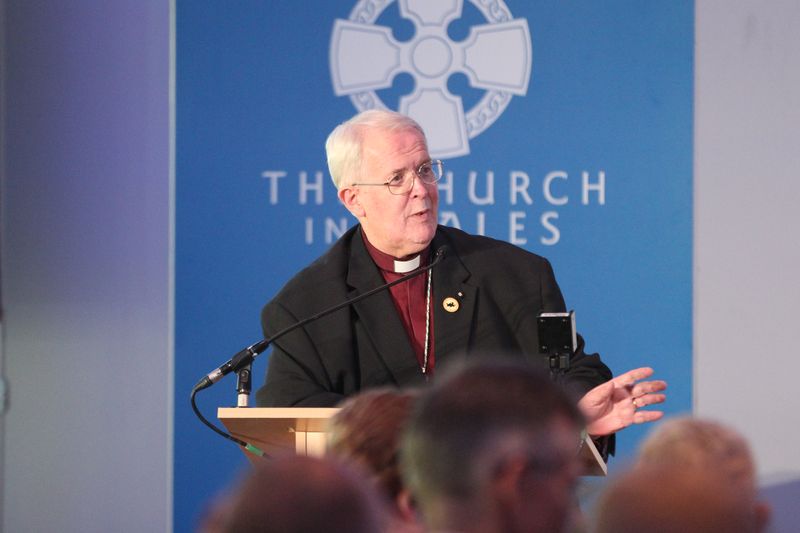
Bench of Bishops report
Bishop Cameron presented the report from the Bench of Bishops, beginning with work on same-sex unions. The bishops had hoped to simply roll over the current temporary provision for same-sex blessings into a permanent form this year (as happened in April), and then bring forward legislation for same-sex marriage next year. This approach, however, will no longer work, as for complex legal reasons the GB has to have its bill approved by the Westminster government first. There were other questions about whether new liturgies could swiftly follow a law changing the doctrinal position. It was also important this process continued with the current spirit of respect and tolerance for those who disagreed with these reforms, rather than “sprinting to the finish line”.
The bishops planned to discern next year the theology “for and against change” with the GB, and then move forward later with legislation informed by this. This would make substantive change longer to achieve, but would ensure any changes introduced to GB would be properly thought-through.
Bishop Cameron also touched on the clergy wellbeing survey, and paid tribute from the bench to the Church’s hard-working ministers. There was also some shifts with the Church’s ecumenical relations to report, most notably a pause in activity of the commission which oversees the covenant agreed back in the 1970s by several major Welsh denominations but which has now been mostly superseded by the work of Cytun.
He also raised new guidance from the Equality and Human Rights Commission (EHRC) on public provision for transgender people. Bishop Cameron said they had sought to defend trans members of the Church who felt bewildered by these changes, but insisted the bench was not trying to evade the legal requirements of the Equality Act as some had accused them.
Bec Murphy, the head of HR for the Church, then spoke briefly on the clergy wellbeing survey, explaining a working group had been set up to take forward recommendations from the survey’s findings over the next 12 months. A new wellbeing survey for non-stipendiary ministers was also in the pipeline.
Hannah Rowan (Llandaff) was “saddened and pained” by the bishops’ decision to delay introducing legislation for same-sex marriage. She questioned how much GB debates could be used to gauge strength of feeling on this issue, and asked for more detail on how next year’s debate on the theology of marriage would be organised.
Archdeacon Hill opposed dividing views on same-sex marriage into a binary of progressive versus traditionalist. He welcomed doing more work on marriage theology, noting not everyone believed marriage was a sacrament which could affect the debate.
Dr Hurrell asked if an “in principle” decision be made quicker by the GB, even if the implementation of that would now take longer than expected. She also urged members to speak very carefully about the contentious and complex trans toilet debate.
Dr Payne said could the physical wellbeing (or otherwise) of clergy also be explored by the working group, not just mental health and burnout.
Canon Lightbown said ecumenical voices from denominations which already permitted same-sex marriage should be heard in this conversation. “We have to acknowledge that God is not an Anglican,” he added, calling for more openness to learning from different Churches.
Canon Wood said clarifying the purpose and strategic direction of the Church could affect clergy wellbeing significantly.
The Revd Sarah Rosser (Monmouth) had had plenty of training on wellbeing as an ordinand, curate and now priest. “We all know what we need to do,” she said, but if these things weren’t happening there were good reasons for it. More training and education was not the solution. Some of it was about structures and institutional decline.
The Revd Melanie Prince (St Davids) welcomed the new working group on wellbeing, and asked if it could consider workable provision for clergy holidays. Simply being told again and again to “take your time off” did not help without a system to enable it to happen. She asked what the pause on the Covenant would mean for Free Church ministers with PTO.
Ms Rowan asked similarly if a Covenant liturgy remained authorised during the pause, and also noted the EHRC guidance did not amount to new law and urged the bishops to continue to defend the “dignity of trans people”. She had also heard a diversity of views on marriage theology over the years, and resisted flattening this out into a binary of those for and those against change.
Ms Schultz said she was relieved the same-sex marriage discussion had been slowed down to create more time to reflect on the broader principles underlying this debate. Many parishioners needed more theological resources to help them engage.
Bishop Cameron, responding to the questions, said he was reassured by the careful thinking and discernment of the GB. He admitted he felt “out of his depth” on the trans questions, and also said the bench would listen carefully to other people’s concerns on the same-sex marriage debate and clergy wellbeing. He clarified that pausing the Covenant would not affect legal realities in ecumenism about interchangeability of ministers or liturgies. He deeply regretted the delay in same-sex marriage legislation, but said it was important to get it right rather than jump the gun. He reassured people that the plan to bring in outside experts for next April’s session was not to set up a binary debate but a more informal conversation, including questions from GB members.
Session 5
Session 5
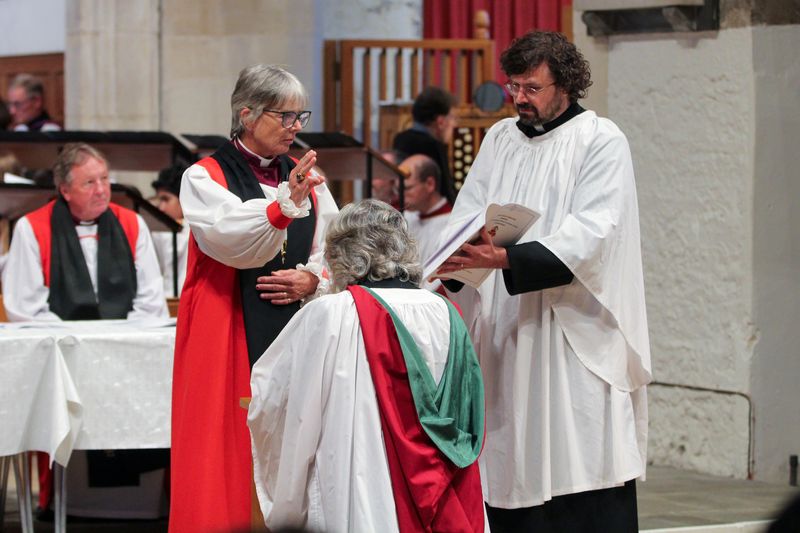
Sacred Synod
On the evening of September 9, the Governing Body travelled to Newport Cathedral for Choral Evensong, a service that incorporated a sacred synod which saw the election of the new Bishop of Bangor, the Rt Revd. Dr Manon Ceridwen James, officially confirmed.
Session 6
Session 6
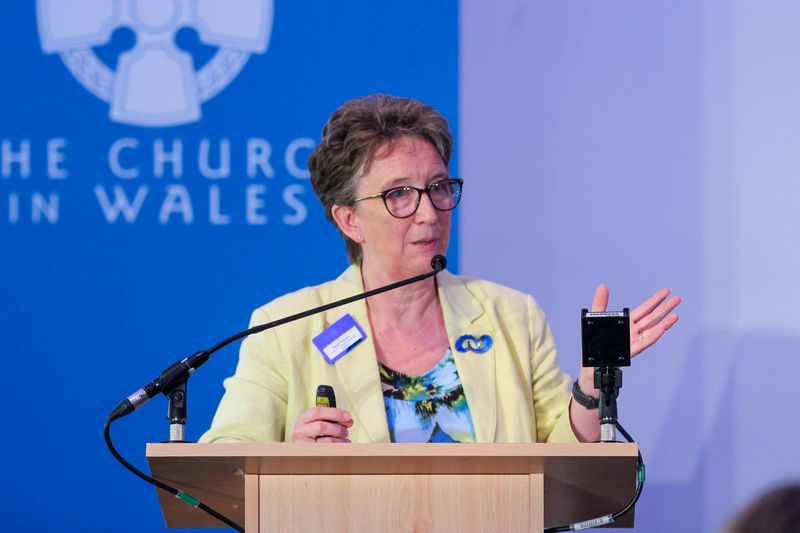
Helen Paynter
Archbishop Vann then invited the Revd Dr Helen Paynter, the executive director of the Centre for the Study of Bible and Violence, part of Bristol Baptist College, to speak to the GB on Christian Nationalism. Dr Paynter said Christian Nationalism posed real threats to societal cohesion and even British democracy. She traced the rise of far-right groups brandishing crosses during protests since 2015, exploding in the last three years. She said people who turned up to such protests, including the Tommy Robinson-led rally in 2024, came for all kinds of reasons, but she was more concerned on the fringe Christian figures invited to speak from the platform and speaking of “war with the Muslim” and making Britain Christian again. The most recent emerging movement was the black-clad paramilitary group Christian Patriotic Army led by ‘Danny Tommo’. Dr Paynter said this was a “very dangerous moment”, as this ‘army’ had signed up 45,000 people within a few weeks.
Christian Nationalism was about much more than just religion, she added, it touched on symbolic, mythical, ethnic and cultural concerns too. She also urged caution about terminology, labels and increasing polarisation between the moderates on both left and right of the political spectrum. While American Christian Nationalism differed from its British cousin, there were large evangelical movements which helped diffuse ideas across the Atlantic, she said. Plenty of legitimate believers had political views on immigration, Christian influence in society, same-sex marriage, gender, end of life issues, and far-right groups were using this to draw Christians into their movements.
Some political actors wanted to build credibility for themselves, while Christian groups wish to build power or influence, and so they collaborate together to promote their shared views to the wider population, drawing in both believing and nominal Christians who are “susceptible” to these viewpoints. To respond to this, the Church had to reflect theologically about the particular issues, as well as wider around polarisation, church-state relationships, the pastoral implications of this cultural moment and more. Churches must equip their members to have enough theological depth to “smell a rat” when slogans such as “Christ is King” are thrown around in politics. Churchgoers should also address the “problematic extremes” of their own ideology, rather than simply attacking the other side’s most radical members, Dr Paynter said.
Barney Hawthorne (Llandaff) asked about social media, which could be both polarising but also a good outlet for expressing truly Christian messages.
Dr Paynter said she would love to see churches using stories and online media to capture hearts and heads.
Ms Dale said many gravitated towards the far-right because they felt ignored, and so it was important that people could air their fears without judgement. Many were happy to criticise moderate Muslims for not speaking up about Isis, and so now it was time for Christians to call out their own extremists.
Dr Paynter said many speakers at Mr Robinson’s carol service had spoken of how they felt excluded by mainstream denominations.
The Revd Matthew Davis (Monmouth) said he’d seen a rise in people exploring faith from a far-right political perspective, and often overlapping with supposedly unrelated conspiracy theories.
The Revd Ben Jones (Swansea and Brecon) asked if there was any research into why ordinary people were increasingly being attracted to extreme views, and how it could be stopped.
Dr Paynter said there had been a global trend towards extremism, and also explained how “bad faith actors” could leverage deep alienation and economic crisis to scapegoat minorities.
Mr Loynd said teenagers in poverty were extremely vulnerable to radicalisation into the far-right, and the Church had to do better than them.
Dr Paynter agreed, and said it was vital to continue to invest in youth work.
The Revd Ruth Coombs (Llandaff) said society was not good at listening to those who were different, and said “this must be the beginning of a call to action for the Church”.
Dr Paynter said churches must be brave enough to host conversations with people they viscerally disagreed with.
Archdeacon Bailey reflected on some of her online friends who had been drawn into extremist views increasingly by social media.
Dr Paynter said this was a huge challenge, but there may come a time to withdraw prophetically from such spaces in protest at how they were fostering radicalisation.
Session 7
Session 7
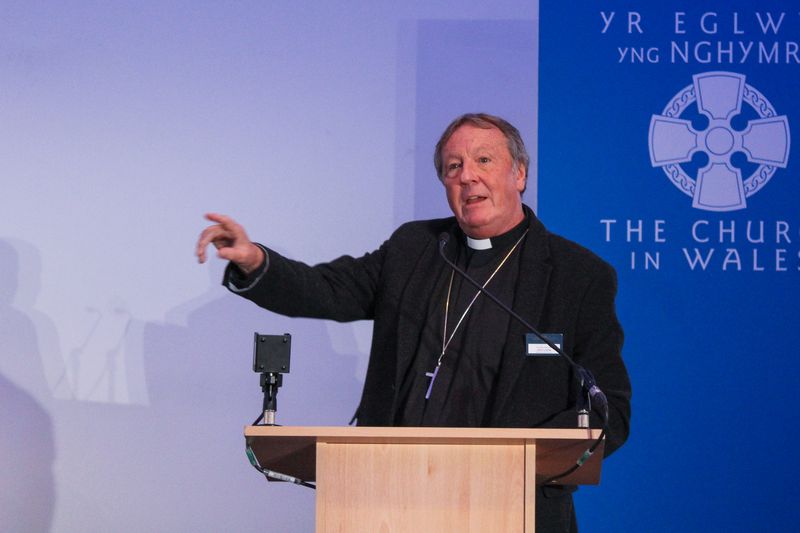
Pioneer and Evangelism Network
The Bishop of Swansea and Brecon, the Rt Revd John Lomas, introduced a presentation on the Pioneer and Evangelism Network by reflecting on the different forms growth can take in the Church, whether spiritual or numerical, using the story of the restoration of Peter in John’s Gospel. “One of the Church’s primary callings is to grow and bear fruit, to go out into the world and step into the unknown,” he said.
Members then watched a video from St Thomas’s in Swansea, reflecting on growth in trust from the community, growth in attendance and growth within ministers. The vicar there encouraged a greater confidence in inviting people into church and confidence in the power of preaching the gospel.
The Revd Emma Ackkland, chaplain to the Bishop of Llandaff, said she knew some feared the idea of pursuing growth. She sat on an Anglican Communion Commission which had explored growth, which had gone well beyond making the church bigger or more numerous. Churches can grow numerically without growing in discipleship or maturity, she explained. It was about participating in God’s work of growing the Kingdom. The Commission’s work, titled Vision36, was the result of listening across the world, and was now targeting a million new congregations globally being planted or renewed. “The Church cannot grow if we, its members, are not also growing,” she said. Adopting Vision36 would need asking what God was inviting the Church to grow into in Wales.
Members then watched another video about a rural church “in the middle of nowhere”, which had also seen growth from about three or four members attending once a month. Several years ago the vicar had written a sermon to announce the church’s closure, but each time he came to preach it a new family had arrived. This prompted a journey to grow the congregation with new initiatives, bringing in even more people, as the church chose to remain in the village even as every other communal building and institution had shut down.
The Revd Dr Jordan Hillebert, director of formation for ministry at St Padarn’s, said growth was not treated as a discreet subject at the college. This was not because it was not important, but because it pervaded everything that happened at St Padarn’s. Growth meant personal growth as followers of Jesus and the Church’s corporate growth as the body of Jesus. This was something they sought to cultivate in their students, and something the students would then lead in their own communities when in ministry. Church growth was beyond human control but a gift of God, Dr Hillebert said. Instead, churches must focus entirely on maintaining their spiritual health and growth would follow.
Members then spent time in small groups on their tables to discuss evangelism and growth. In a brief moment of feedback afterwards, members shared signs of growth in their ministry areas and encouraging people to see what good things were already happening. Others spoke about the barriers to developing congregations, and how to bring about change without losing existing members.
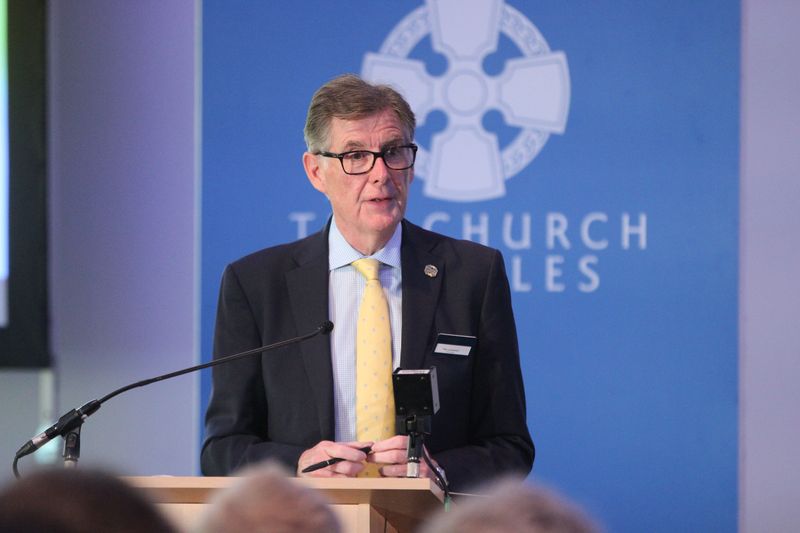
Report of the Standing Committee
The report was introduced by Tim Llewellyn, chair of the standing committee, drawing attention to work by the disability welcome group which was now underway. He then proposed the report’s recommendations which were some changes to the provincial safeguarding guidance, reaffirming how everybody in the Church had some responsibility for safeguarding. This was passed by members, as was a second recommendation to approve the report.
Later, Mr Llewellyn brought a second report on legal and governance matters from the committee. He brought a number of recommendations, beginning with requiring compulsory background checks for senior appointments (as a result of the Anthony Pierce review).
Ms Rowan noted this change would apply to not just bishops and electoral colleges but all senior diocesan officers appointed in the Church.
The Dean of Newport, the Very Revd Ian Black, said he and all his cathedral colleagues were appointed after open processes including adverts in the media and fully supported the proposal, which would create better fields of candidates. The motion was passed.
Mr Llewellyn moved an amendment to the constitution to allow for a four month time limit on electoral colleges rather than two months, which was passed without debate.
He then moved his third motion, which created more flexibility around the location of an archiepiscopal electoral college, which was passed without debate.
The fourth motion addressed private members’ motion, which would allow motions to be brought forward at shorter notice, which was passed without debate.
The fifth motion would boost how many legally-qualified members of disciplinary tribunals were appointed to deal with an increase in cases. It too was passed without debate.
The sixth recommendation was to approve the report as a whole.
Ms Rowan returned to the podium to note that although the safeguarding changes approved earlier only legally affected senior diocesan appointments, they should be voluntarily applied to anyone recruiting at the ministry area too.
Bishop Lomas agreed with this, arguing that it appeared at present that the only people not trusted were bishops and diocesan senior leaders. There was no provision in the Church to move people out of their posts after poorly-made appointments, which was as a big a problem as poor recruitment. He called for some kind of probationary period to be introduced.
The motion to approve the report was then passed.
Questions
The first question from Hannah Wilkinson (St Davids) asked in each diocese and the provincial office how many stipendiary, non-stipendiary, retired clergy there were, as well as how many non-clerical paid staff.
The Bishop of Llandaff, the Rt Revd Mary Stallard, explained that the figures she would share with the GB were only a snapshot for the situation as of the 13 August this year. In the provincial office there was one stipendiary cleric (Archbishop Vann), while in Swansea and Brecon 48 stipendiary and 18 non-stipendiary (and a further 95 active retired clergy, and 33 non-ordained paid staff). In Monmouth there were 49 stipendiary and 12 non-stipendiary clergy, nine retired clergy and 11 lay paid staffers. In Llandaff, 99 stipendiary and 18 non-stipendiary clergy, 190 retired clergy, and 20 paid lay staffers. In St Davids, 79 stipendiary and 29 non-stipendiary, 52 retired clerics and 17 lay paid staff members. In Bangor, 35 stipendiary and 13 non-stipendiary clergy, 20 retired clergy and 17 paid lay staff. In St Asaph there were 70 stipendiary and 12 non-stipendiary clergy, 143 retired clergy and 17 paid lay staffers. Furthermore, the provincial office employed 60 people full-time, another five part-time and two ordained salaried staff, while St Padarn’s employed 32 full-time staff, 14 part-time and six ordained salaried staff. Bishop Stallard said she appreciated the intent behind the question was how many clergy the Church had and how many it could afford, but also how many paid lay roles were required. Interpreting these figures would be complex, she said, as they would raise more questions no doubt.
Ms Wilkinson said she’d asked the question because so many people grumbled that diocese’s were overstaffed, so was grateful for the clarification.
The second question came from Archdeacon Grimwood, who followed up a question from 2022 by asking if the clergy pension scheme had been removed from the RB’s general assets.
In response, the Archdeacon of St Davids, the Ven Paul Mackness, explained that legal advice had confirmed there was no need to separate the pension scheme from the wider investment portfolio. Keeping pension liabilities within the investment pool had generated greater returns than if they had been hived off to their own separate fund, he added, but being subsumed into the general fund did not mean they were not protected.
Archdeacon Grimwood asked how the funds could possibly be safeguarded without legal separation.
The third question came from Canon Justin Davies (Swansea and Brecon) who noted there was no province-wide resources or structure to support ministry with children and young people, and asked if the GB and RB could commit to creating an properly-funded provincial strategy for this ministry.
Bishop Stallard said in response there was a children and youth workers’ network across the province, and discussion was underway to make a new model of accountability and leadership for this. She also pointed to the Growing Faith programme by the National Society. The work had not been forgotten about, he insisted.
The fourth question was from Tony Mullins (Llandaff) who asked for an update from the standing committee on its deliberations on removing the age limits on holding office.
In response, Mr Llewellyn said this had been discussed but the committee did not wish to undertake any changes at present. A private members’ motion was an option for Mr Mullin if he wished to take this forward regardless.
Mr Mullins said in response Jesus had put no age limit on his disciples and found “ageism of any kind very difficult to accept”.
Session 8
Session 8

Private Members Motion
Archdeacon Grimwood proposed a private members’ motion which asked the RB to present options on how to raise clergy stipends and pensions so they matched the higher rates on offer in the Church of England, and also plans for a “sustainable and dignified clergy retirement housing scheme”. He emphasised he was not explicitly asking for pay parity with England, but for costings to achieve this to be brought for discussion at a future GB meeting. Retaining and recruiting more clergy was a challenge as more and more are looking across the border to secure a higher stipend, he argued. Many clergy of his generation and younger have had to take out additional private pensions to ensure a decent retirement, fearing the church’s provision would not be sufficient as care costs rise. Some help with housing costs in retirement would greatly help peace of mind for clergy.
The motion was seconded by Anna Cory (Llandaff). She appreciated the financial pressures in the Church, and that depleting RB reserves to boost stipends and pensions was not a long-term strategy. But she said future provision must be part of the wider debate on funding in the Church. Parish work in England with better stipends and pensions will seem increasingly tempting to hard-pressed Welsh priests.
Canon Elliott welcomed the motion, especially the elements around retirement housing. He said the first part of the motion would be opening up a “hornet’s nest”, as English stipends were part funded by parochial fees received by their parishes.
Archdeacon Bailey said Welsh curates received a stipend of £26,474, while the national minimum wage for a full-time worker was just £36 less than that. If they were in Scotland, the same curate would be paid £32,742 (which increases throughout curacy) and in England curates were paid £33,350. Yes, curates could receive fees but certainly not at the rate of £6,000 a year, she said. How could vocations be encouraged under this situation? But she also knew many English dioceses were struggling to pay the new higher stipends and reviewing their clergy numbers as a response.
The Revd Robert Moore (St Davids) would be voting for the motion, but he encouraged the RB to review things more broadly than seeking parity with the Church of England. He also questioned if the comparisons with the C of E were truly like-for-like, and was unconvinced if parity with England should be the objective. There were other ways to improve the position for clergy than by boosting stipends and pensions, such as reducing clergy costs by more energy efficiency in vicarages.
Ms Rowan raised the issue of parental leave, and asked if there might be parity of provision for clergy away from work for other reasons. She only received 18 weeks full pay while on parental leave, while some English dioceses nearby offered up to 52 weeks.
Mr Lightbown, trained and ordained in England, said he would not go back across the border just for a higher stipend. He noted that English clergy do not keep parochial fees like clergy in Wales do, and also that addressing energy bills in tied housing which vicars did not choose was another way to improve the situation.
The Revd Adam Pawley (St Asaph) asked if parity between the dioceses could also be explored, as well as across the border in England – and said many clergy could never do enough funerals or weddings to top up the difference in stipends.
Mr Llewellyn said the motion addressed the RB but if it were to succeed would it not be the dioceses who ultimately bore the cost?
Mr John backed the motion, saying that housing cannot be separated from pension provision. It was not perfect, but a good starting point to begin thinking about how to care properly for the Church’s clergy.
The Revd Jonathan Durley (Llandaff) said a more equitable structure was needed within the Church, as some clergy earned huge sums from parochial fees while others struggled along with nothing on the breadline.
Robert Evans (Monmouth) said the Church needed more well-paid and well-motivated clergy, and called for a proper root-and-branch review of clergy pay rather than this piecemeal offering. It would not be cheap or easy, but a fundamental change was needed.
The motion was put to the vote and passed almost unanimously.
Code of Conduct
Mr Llewellyn then proposed a new chapter of the code of conduct for clergy which tackled financial integrity. This had been subject to a consultation earlier this year, which led to the threshold for receiving gifts cut from £500 to £200. “Money can so easily lead to relations becoming very complicated quickly,” he warned. Clergy and licensed lay ministers had to both hold a high standard of behaviour and be protected from embarrassment, he said.
Dean Black said there seemed to be a gap around how deans reported gifts.
Mr Llewellyn said that had been left unresolved as the bishops had to decide how best to handle this.
The code of conduct was approved by the GB.
Farewells
Archbishop Vann then led farewells to the former Archdeacon of Brecon, the Ven Alan Jevons, who served on numerous committees and boards during his decades of ministry and has now retired. She also paid tribute to the former Dean of St Davids, the Revd Sarah Rowland-Jones, who has moved closer to family and back to parish ministry. She also thanked those GB members who terms of office were coming to an end.