Church bells to ring for first time at Easter service in Betws-y-Coed
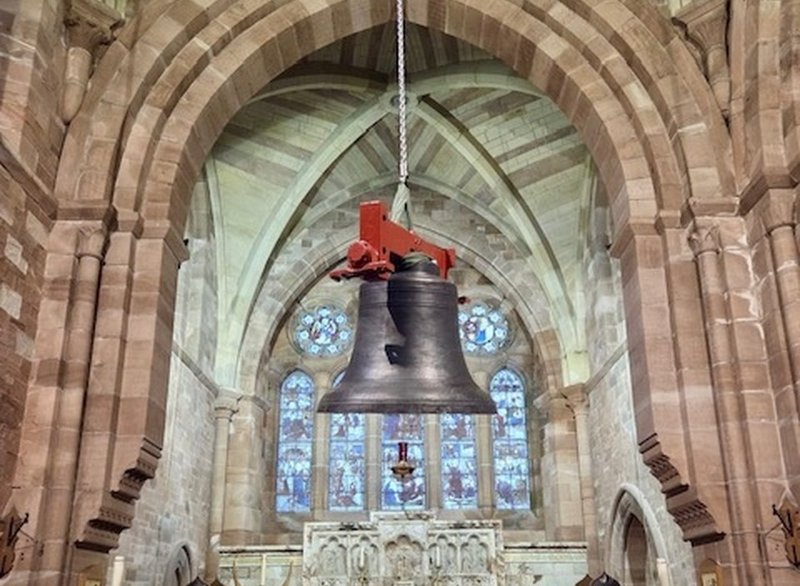
Bells at St Mary’s Church in Betws-y-Coed will rung for the first time at a church service this Easter, following the completion of a major restoration project.
Although the church was built with plans for a full ring of bells, that work was never completed. More than 150 years later, the tower now has a full set in place.
Eight of the bells were brought from St John’s Church in Porthmadog in 2024, after the church closed, linking the two communities. The remaining bell, cast in 1873 for Betws-y-Coed by John Warner of London, has been restored and rehung as the clock and chiming bell.
The bells will be rung before a family Eucharist and blessing of lambs at 11:00 on Easter Day.
The project began in 2019 during a conversation at the Llanrwst Eisteddfod involving members of Côr Penmachno. Several choir members were bell ringers but had no local tower to practise in, which led to the idea for the project. Members of that original group plus other local peoplehave taken on key roles. Nigel Thomas is now the Tower Captain, with others serving as secretary, treasurer and steeple keepers.
The eight bells from Porthmadog were cast by John Warner & Sons, with six dating from 1900 and two added in 1902. They were retuned and prepared for installation by Taylor’s Bell Foundry before being hung in the tower.
Work on the installation included cleaning and tuning the bells, removing original fittings and installing new headstocks. A new base frame was designed using sections from the Porthmadog installation, supported by the original beams in the tower. The church clock mechanism has also been replaced so it can now chime the hour.
The project has cost around £100,000, funded mainly through grants, including support from the Keltek Trust, Hobart Trust and Bernard Piggott Trust.
During the work, newspapers dating from October 1874 were found in part of the tower, including a copy of the Caernarvon and Denbigh Herald which mentions Betws-y-coed.
The bells have been dedicated to eight local people, including former church wardens. Three of those named are still living and are expected to attend the Easter service.
Revd Stuart Elliott, local priest and Ministry Area Leader of Bro Gwydyr said, “It was a wonderful and emotional moment to hear the bells during a test ring. It will be extraordinary to hear them rung for the first time at a church service on Easter Sunday, so that the whole community can hear the invitation they proclaim. It is quite a transformation for the village
“Whilst this project was essentially a practical one of buildings and structure, at its heart is the new community of ringers that will be able to be created around the church. The project would not have been possible without the dedication of the local group who worked hard fundraising and helping with the physical work fitting the bells. We must also acknowledge the many local donations from people and businesses together with Keltek Trust, Hobart Trust and Bernard Piggott Trust for their generosity which made this project happen.”
After the service, a Quarter Peal will be rung, lasting about 45 minutes. This is a form of change ringing using a set sequence known as Plain Bob Triples. Four of the ringers taking part also rang the final Quarter Peal at St John’s Church in Porthmadog before it closed.
The heaviest bell in the ring weighs more than 10 hundredweight, and together the bells are tuned in the key of G.
Easter Day will mark the first time the full ring is used as originally intended when the church was built in the 19th Century.
Read the full news story on the Diocese of Bangor website:
Diocese of Bangor - Latest News